Commercial Roof Repairs
Precision Repairs for Every Commercial System
From a single seam failure to widespread membrane damage, our commercial repair technicians restore your roof's integrity using manufacturer-approved materials and techniques. We work on TPO, PVC, EPDM, metal, modified bitumen, and built-up systems.
Why It Matters
TARGETED REPAIRS CAN EXTEND SYSTEM LIFE
Not every issue requires a full replacement. Where the deck and insulation are still sound, well-executed repairs can add years of service life — buying time for capital planning and avoiding unnecessary disruption to your operations. How many years depends on the system's condition, its drainage and what the survey finds.
- Membrane patch and seam re-welding
- Flashing repair at HVAC curbs and penetrations
- Drain repair and replacement
- Parapet wall and coping restoration
- Edge metal repair and replacement
- Ponding water correction
What Sets Us Apart
THE YOSEMITE DIFFERENCE
Our crews are trained on all major commercial roofing systems, so repairs follow manufacturer specifications. Approved methods and materials may be required by your warranty; coverage also depends on its other terms and maintenance conditions.
We stock the most common commercial repair materials on our trucks for same-day or next-day turnaround on urgent repairs.
Every repair includes an inspection of the surrounding area to identify developing issues before they require emergency attention.
Common Commercial Roof Repairs in East Texas
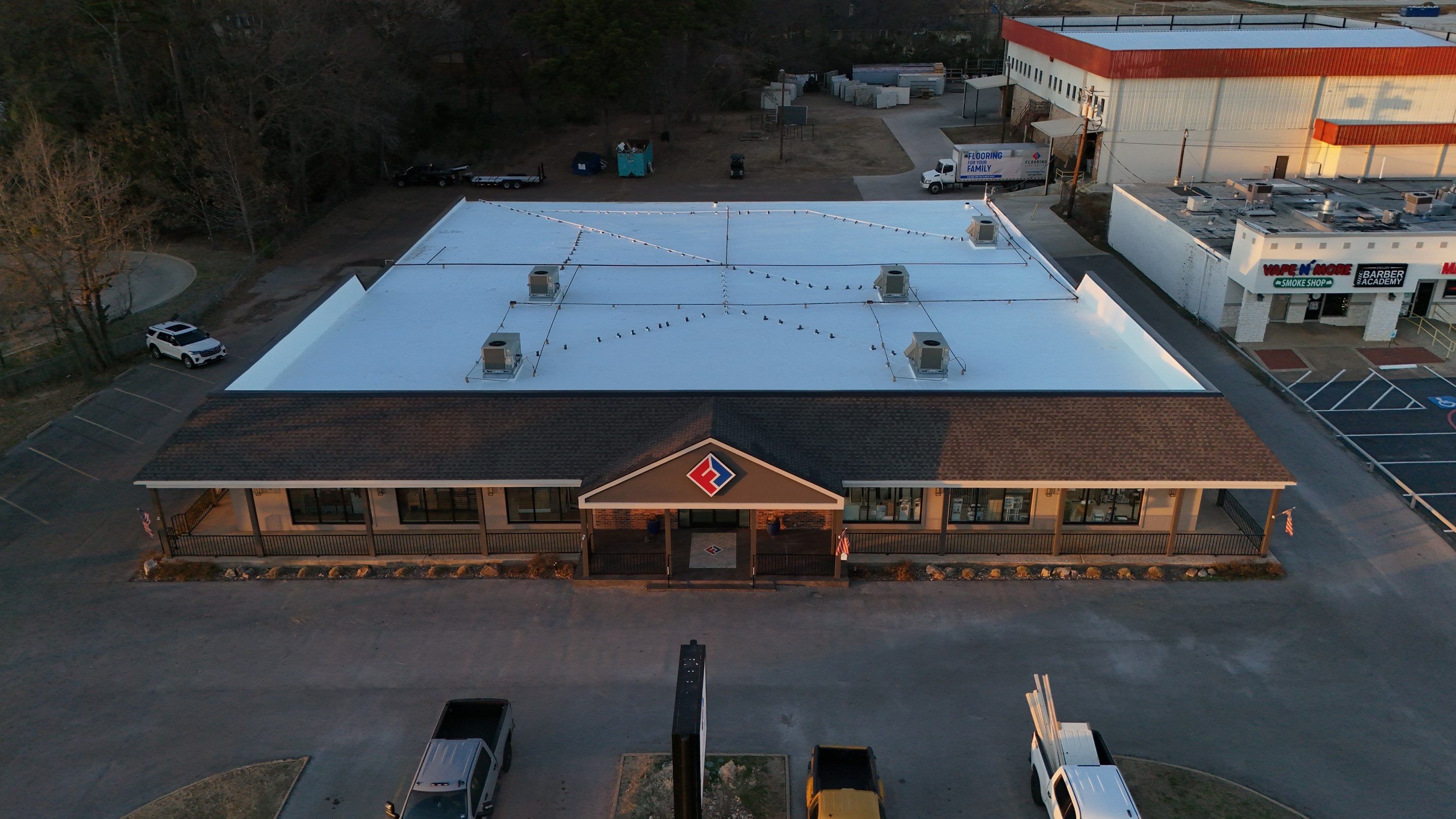
The East Texas climate creates specific challenges for commercial roofs: intense UV radiation degrades membrane surfaces, thermal cycling stresses seams and flashing, and severe storms damage edge metal and equipment surrounds. The most common repairs we perform include re-welding lifted TPO/PVC seams, patching membrane punctures from foot traffic or debris, replacing failed pipe boots, and restoring flashing around HVAC equipment.
How to Prepare for Your Commercial Roof Survey
A little preparation makes the assessment faster and more useful. Have the building's use ready to describe (warehouse, retail, restaurant, medical, manufacturing) along with anything that affects the roof, such as kitchen exhaust or heavy rooftop equipment. Note where leaks appear inside and when they show up — during driving rain, after a freeze, or continuously. Photos of stains and drips help, as does any history of previous repairs. Gather whatever roof records exist: the original system type, install date, prior repair invoices, warranty documents and maintenance logs. Finally, tell us how roof access is arranged — interior hatch or exterior ladder, tenant restrictions and hours, and any escort or safety requirements — so the survey can be scheduled appropriately.
What the Assessment Compares
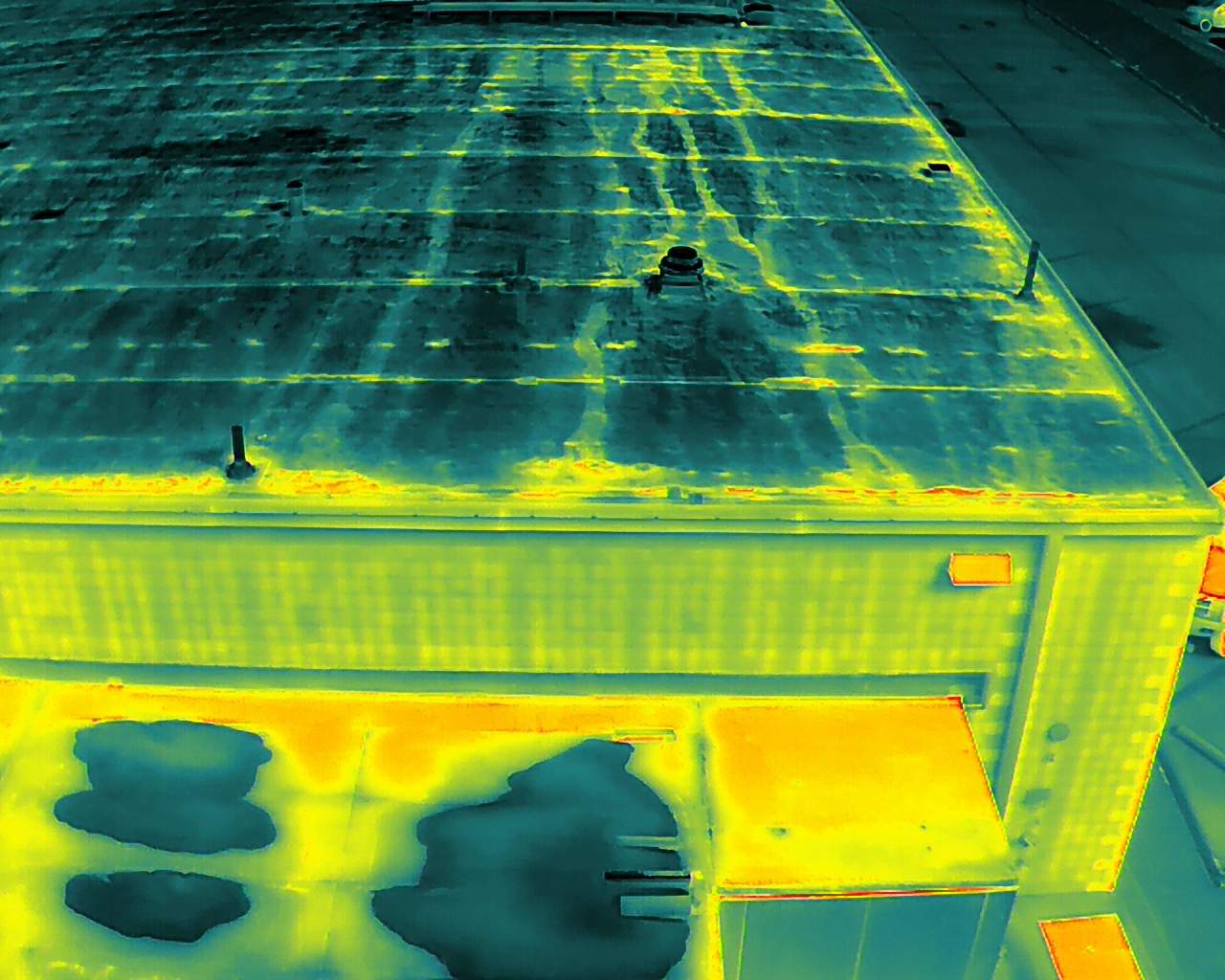
We identify the existing roof system and its assembly, then examine the details that usually fail first: seams and laps, flashing at curbs, walls and penetrations, edge metal, and whether drains and scuppers actually move water off the roof. We map the extent of damage rather than just the leak you reported, because the entry point is often away from the interior stain. Where conditions suggest trapped moisture in the insulation, that is flagged for verification — a moisture meter reading, a core cut or a scan may be recommended before scoping the work. If further investigation is needed to answer a question honestly, we say so instead of guessing.
Repair or Replace: How the Decision Is Made
Condition drives the decision, not age alone. Localized damage over a dry, sound deck and dry insulation generally points to repair. Widespread membrane deterioration, chronic ponding, multiple active leaks, saturated insulation or a compromised deck point toward sectional or full replacement, because patching over wet material buries the problem. Where a repair is the right call, we explain what it addresses and what it does not; where replacement is warranted, we lay out the system options — TPO, PVC, standing-seam metal or modified bitumen — with the warranty terms each system actually qualifies for. Ongoing inspections and preventative maintenance keep the documentation many warranties require. Ready to start? Request a commercial roof survey.
Need Commercial Roof Repairs?
Don't wait for the damage to get worse. Our Tyler-based team is ready to help — call now or schedule a complimentary inspection.