TPO vs PVC vs EPDM: Single-Ply Commercial Roofing Compared
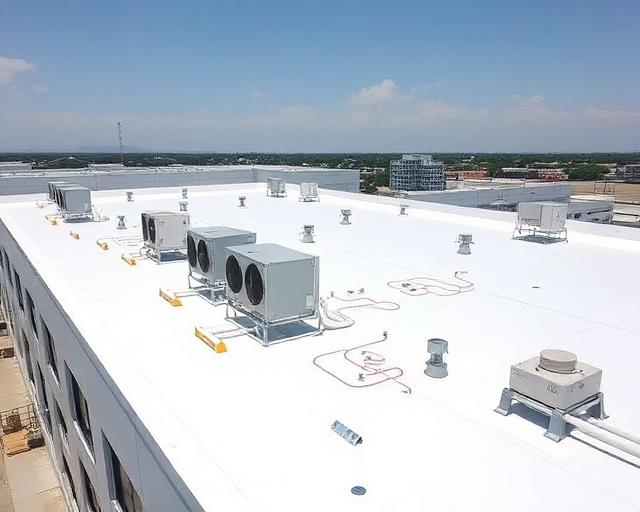
If you own or manage a commercial building in Tyler, TX with a flat or low-slope roof, you've almost certainly heard the terms TPO, PVC, and EPDM. These are the three dominant single-ply commercial roofing membranes installed across East Texas — and choosing between them is one of the most consequential decisions a commercial property owner will make. The wrong system can cost you 10+ years of premature roof failure, energy waste, and chemical-related leaks. This guide compares TPO vs PVC vs EPDM head-to-head and tells you, honestly, which one is right for your building.
TPO (Thermoplastic Polyolefin) — The Market Leader
TPO is the most-installed commercial roofing membrane in the United States today, and it dominates new commercial construction across Tyler and East Texas. It's a white, reflective single-ply system installed with heat-welded seams that create a fully watertight bond. Pros: highly energy-efficient (Energy Star rated, cuts commercial cooling bills 15–25%), competitive pricing, fast installation, 20-year manufacturer warranties standard. Cons: no chemical resistance (avoid for restaurants with kitchen exhaust), formulation has evolved over the years so installation quality varies by contractor, requires factory-trained installers for seam welding.
PVC (Polyvinyl Chloride) — The Premium Choice
PVC was the original single-ply membrane (predating TPO by 30+ years) and remains the gold standard for commercial buildings with chemical exposure. Pros: superior chemical resistance (the only single-ply system that handles grease, oils, and animal fats — required for most restaurants), inherent fire resistance, proven 30+ year track record, heat-welded seams. Cons: more expensive than TPO (typically 15–25% higher installed cost), heavier than TPO, requires certified installers. PVC is our default recommendation for any Tyler, TX restaurant, food-processing facility, or building with chemical exposure.
EPDM (Ethylene Propylene Diene Monomer) — The Workhorse
EPDM is a black rubber membrane that has protected commercial roofs for over 40 years. Pros: extremely durable (50+ year potential lifespan), excellent cold-weather performance, lowest installed cost of the three systems, simple installation (no heat welding required — seams are adhesive or tape). Cons: black color absorbs heat (the opposite of energy-efficient — adds 10–20% to cooling costs in Texas summers), seams are the most common failure point, less common in new East Texas installations because building owners prefer reflective white membranes.
Head-to-Head Cost Comparison (East Texas, 2026)
Installed cost per square foot in the Tyler, TX market: EPDM $5–$7, TPO $6–$9, PVC $8–$12. For a 20,000 sq ft commercial building, that's a swing of $60,000–$140,000 between the cheapest and most expensive option. Cost should not be the only factor — a TPO roof that fails at year 12 because of poor chemical resistance will cost far more than the PVC that lasted 25.
Lifespan Comparison
Properly installed and maintained, you can expect: EPDM 25–30 years, TPO 20–25 years (newer formulations approaching 25–30), PVC 25–30+ years. The single biggest factor in actual lifespan is installation quality — a poorly seamed TPO will leak in year 5, while a perfectly installed EPDM can hit 40 years.
Energy Efficiency Comparison
White reflective membranes (TPO and white PVC) carry Energy Star ratings and reflect 70–80% of solar radiation. Black EPDM absorbs roughly the same amount. In a Tyler, TX summer with 100°F+ ambient temperatures, the rooftop surface temperature difference between white TPO and black EPDM can exceed 60°F — translating directly to your air conditioning bill.
Which Single-Ply System Is Right for Your Tyler, TX Commercial Building?
Restaurant, food service, or any building with kitchen exhaust → PVC, no exceptions. General retail, office, warehouse, or church with a tight budget → TPO. Building owner planning to hold the property 25+ years with no chemical exposure → PVC or premium TPO. Cold-storage facility or building with significant rooftop foot traffic → EPDM (still has a niche). When in doubt, request bids on multiple systems — a reputable commercial roofing contractor like Yosemite Roofing will give you an honest recommendation based on your facility, not a sales quota. Call (903) 326-7255 for a free commercial roof assessment and side-by-side bid on the systems that fit your building.
Now that you know what to look for, find out what your roof actually needs.
Start with a commercial roof survey to discuss the roof's condition, your building's needs, and the scope of repair or replacement options.
Frequently Asked Questions
Which is better, TPO or PVC?+
Both are excellent. PVC wins for any building with chemical exposure (restaurants, food processing, healthcare), while TPO wins on cost for general commercial applications. We install both depending on the building's specific requirements.
Is EPDM roofing still used in East Texas?+
Yes, but mostly for replacement or repair of existing EPDM systems, and for cold-storage facilities. New commercial construction in East Texas overwhelmingly favors reflective white TPO or PVC because of the cooling-cost benefits.
How long does a TPO roof last in Texas?+
A properly installed TPO roof from a factory-certified contractor lasts 20–25 years in East Texas climate. Newer high-performance TPO formulations are pushing into the 25–30 year range.
Why is PVC required for restaurants?+
Kitchen exhaust vents grease, oils, and animal fats onto the roof surface — and these substances degrade TPO and EPDM membranes. PVC is the only single-ply system with inherent chemical resistance to handle restaurant exhaust.